

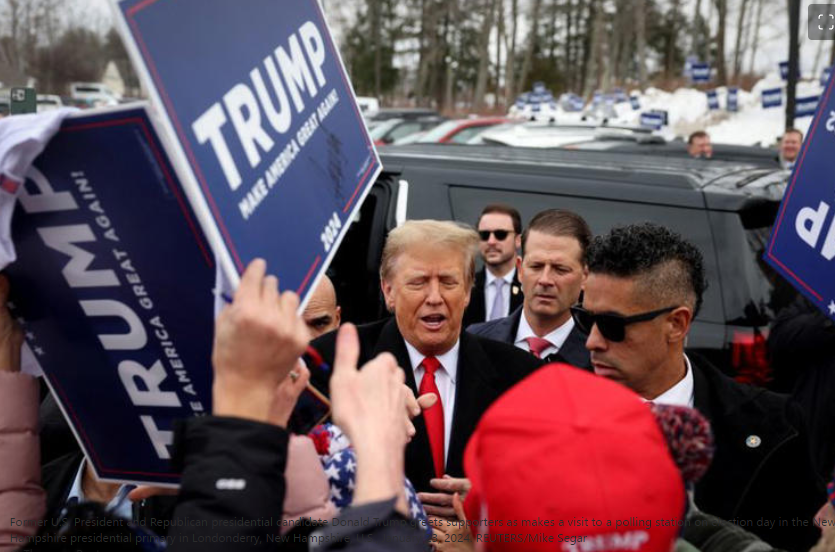
Donald Trump’s approval ranking stays at 32%, in response to the newest Reuters/Ipsos ballot, whereas solely 31% of People help the battle with Iran. The Republicans have misplaced management of Congress, and essentially the most revealing a part of the midterm election is just not what number of voters switched to the Democrats. It’s what number of Republican voters merely stayed residence. An evaluation by J.L. Companions discovered that 35% of Trump’s 2024 voters didn’t take part within the November 3 midterms, in contrast with 22% of those that voted for Kamala Harris. Practically half of his non-college-educated supporters did not end up. It is a critical warning concerning the financial and political penalties of a battle that People by no means anticipated to develop into the centerpiece of this administration.
The Republicans ought to look at these numbers earlier than blaming their defeat solely on the Democrats, the media, or disloyal voters. Amongst Trump’s 2024 supporters, 46% of these with no school diploma, 39% of rural voters, and 44% of these over 65 didn’t vote within the midterms. These are teams that helped construct his political coalition. One other evaluation of 13 states by election researcher Lenny Bronner estimated that roughly 75% of Democratic positive factors got here from turnout variations, whereas roughly 20% got here from voters switching from Republicans to Democrats. These are analytical estimates relatively than a definitive nationwide depend, however they level towards one thing essential. Many citizens who supported Trump in 2024 didn’t essentially develop into Democrats. They merely didn’t return to the polls in 2026.
There may be an financial clarification that Washington can not afford to disregard. People have spent years scuffling with costs that rose sharply following the pandemic. The inflation fee might have declined from its peak, however that doesn’t reverse the cumulative enhance in the price of dwelling. Meals, housing, insurance coverage, utilities, and primary providers stay significantly dearer than they have been in 2020. Trump didn’t create the inflationary penalties of the pandemic, the large growth of presidency spending, or the financial insurance policies that accompanied it. He inherited an financial system through which the buying energy of wages had already been severely broken. However the choice to enter a battle with Iran launched one other main shock into an financial system that was already below stress.

Power is the crucial hyperlink between international coverage and the American family. The battle with Iran has disrupted oil markets and pushed gasoline costs larger. Common gasoline prices throughout Trump’s present time period had risen above the typical recorded throughout Biden’s presidency. Decrease power prices have been among the many financial enhancements People anticipated. All of us bear in mind the “I did that” stickers on gasoline pumps throughout the nation.
Trump’s supporters didn’t essentially count on each value enhance to vanish when he returned to workplace. They did, nevertheless, count on an administration centered on restoring home financial stability relatively than committing American assets to a different extended Center Japanese battle. Trump constructed appreciable help by criticizing the limitless wars that consumed American lives and taxpayer funds with out producing lasting political stability. The battle with Iran has now created exactly the form of open-ended monetary and navy dedication that many citizens believed Washington ought to keep away from. Regardless of the strategic arguments for the operation, its financial penalties are being felt domestically.
The polling demonstrates how dramatically the political atmosphere has modified. In September, Reuters/Ipsos discovered that Republican approval of Trump’s dealing with of the price of dwelling had fallen from 70% in January to 44%. His approval amongst Republicans on the broader financial system declined from 80% to 56% over the identical interval. An October Reuters/Ipsos survey discovered that 78% of People blamed Trump’s policies at the very least partly for costs rising sooner than their earnings. That doesn’t set up that his administration brought about all these will increase. It demonstrates that voters more and more affiliate the federal government at the moment in energy with their deteriorating monetary circumstances. Political accountability and financial causation are usually not all the time the identical factor.
The November 16 Reuters/Ipsos survey additionally revealed that Trump’s Republican supporters stay comparatively loyal when requested about their get together’s management. Some 75% of Republicans expressed favorable views of Trump, whereas 77% considered Vice President JD Vance favorably. That’s the reason the turnout figures deserve extra consideration than the approval ranking alone. A voter can proceed to determine as a Republican, favor Trump over Democratic leaders, and nonetheless develop into sufficiently dissatisfied or exhausted to keep away from taking part in an election. The distinction between expressing help in a ballot and truly voting can decide management of Congress.
That very same Reuters/Ipsos survey discovered that solely 34% of Democrats considered Senate Democratic chief Chuck Schumer favorably, whereas 43% considered him unfavorably. Home Democratic chief Hakeem Jeffries carried out higher, with 40% favorable and 29% unfavorable scores amongst Democrats. There may be dissatisfaction throughout the political institution. People are a authorities that continues spending monumental sums whereas the fundamental price of sustaining a family stays elevated. Altering the get together controlling Congress doesn’t routinely resolve that underlying financial downside.
The Republican turnout downside displays multiple difficulty. Midterm participation is generally decrease than presidential turnout, and youthful voters, demographic modifications, candidate high quality, and native political situations all affect election outcomes. The obtainable information don’t show that each absent Republican voter stayed residence due to Iran. However the mixture of declining financial approval, widespread concern over dwelling prices, and restricted public help for the battle supplies a compelling clarification for why enthusiasm weakened. Earlier than the election, Reuters/Ipsos discovered that solely 33% of Republican voters have been very captivated with voting, in contrast with 49% of Democrats. The warning was seen earlier than a single poll was counted.
Trump can not reverse the cumulative inflation of the previous six years with a speech or an govt order. The Federal Reserve can not merely decrease rates of interest and restore the buying energy that households have already misplaced. What an administration can affect, nevertheless, is whether or not its insurance policies introduce extra financial shocks. The battle with Iran has positioned stress on power markets at exactly the second People want reduction. That may be a consequence of international coverage selections made below this administration, regardless that the broader inflation downside started years earlier.
The midterms reveal the political price of ignoring that distinction. Hundreds of thousands of People who supported Trump in 2024 have been much less keen to take part in 2026, whereas voters annoyed by the price of dwelling turned out in better numbers for the opposition. This doesn’t imply the nation has immediately embraced the Democratic institution. It means the financial frustrations that helped return Trump to the White Home stay unresolved, and the battle has added one other burden.
