

EXPLAINER
The deployment marks the primary time in years that three Vanguard-class vessels have been at sea on the identical time.
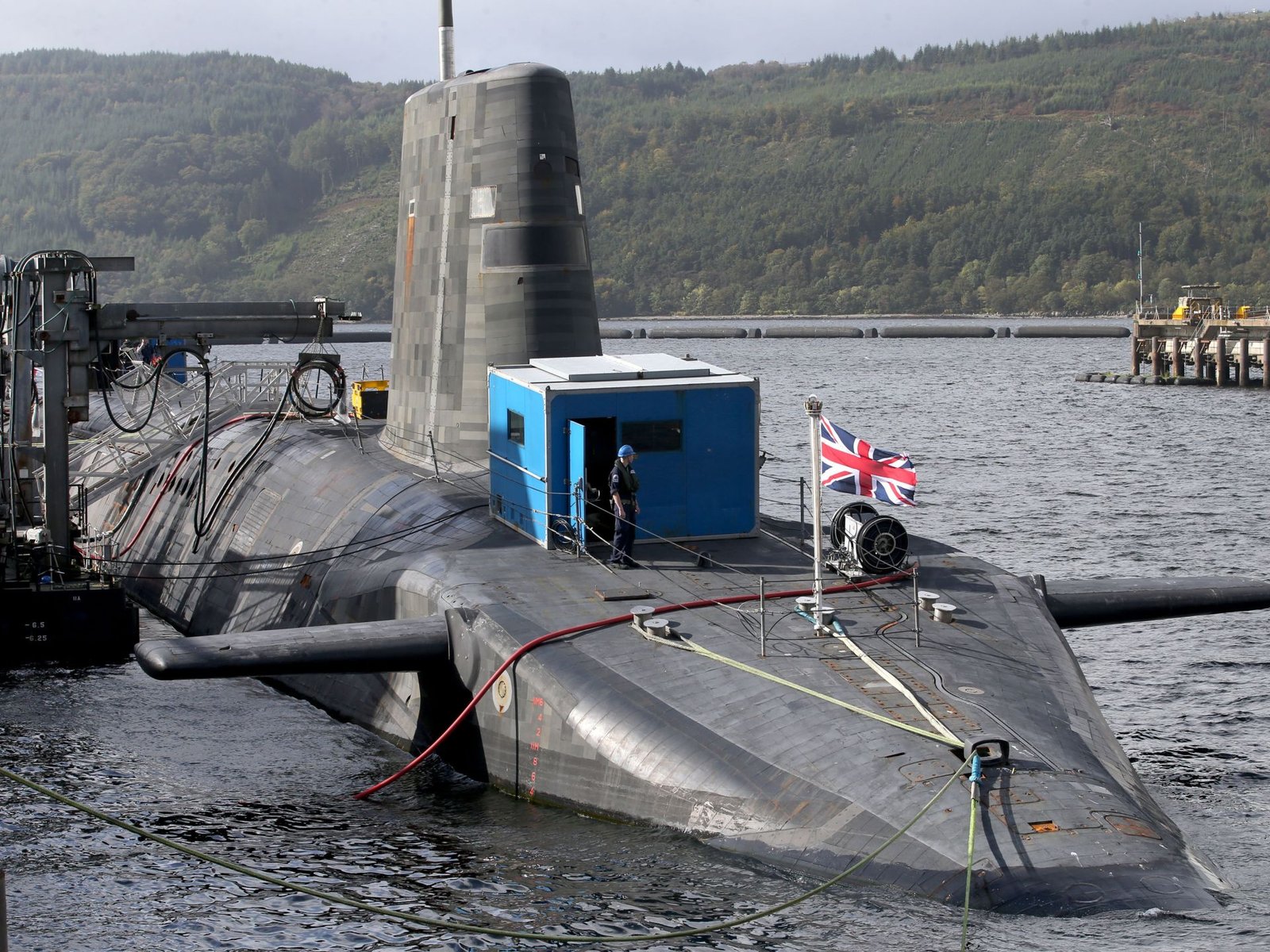
The UK has concurrently deployed three of its 4 nuclear deterrent submarines at sea for the primary time in 5 years, The Occasions reported on Wednesday.
At the very least one of many vessels – referred to as Vanguard-class submarines – was stated to be armed with ballistic missiles which carry nuclear warheads.
Beneficial Tales
listing of three objectsfinish of listing
The report named the three submarines at sea as HMS Vanguard, HMS Vigilant and HMS Vengeance, with the fourth, HMS Victorious, at present present process upkeep.
A navy supply quoted by The Occasions described the deployment as “uncommon”, with out elaborating.
The UK repeatedly deploys no less than one of many 4 submarines as a safety assure.
The deployment has raised questions over whether or not the UK has modified its defence posture after Defence Secretary Wes Streeting warned final week that Britain must be ready for warfare.
Right here’s what we all know:
Has this occurred earlier than?
The final time three submarines had been at sea was greater than 5 years in the past, in keeping with The Occasions.
Navy Lookout, the UK’s main unbiased publication on the Royal Navy, says one submarine carrying ballistic missiles has been at sea with out interruption since 1969.
It stated the second vessel was believed to be making ready to alleviate a patrol boat, whereas the third was seemingly conducting sea trials or work-up exercise.
Final 12 months HMS Vanguard patrolled the seas for 200 days, only a week shy of the longest identified submarine deployment of 207 days, carried out by HMS Victorious in 2021.
What has the UK authorities stated?
In line with Sky Information, a spokesperson for the defence ministry stated the nation’s nuclear deterrent is the “cornerstone of our nationwide safety, defending the UK and our NATO allies each second of every single day”.
“We stay the one European ally to commit its nuclear deterrent to the defence of NATO. Because of this all NATO allies already profit from the safety of our nuclear deterrent,” the spokesperson added.
Final week, British and French fighter jets flew collectively of their first joint train involving France’s airborne nuclear functionality.
The French armed forces ministry stated British RAF Storm fighters escorted the French jets, simulating a nuclear strike.
France’s Armed Forces Minister Catherine Vautrin stated that having “unbiased nuclear forces doesn’t preclude coordination”.
“Our nuclear cooperation with the UK continues to deepen,” she added.
The UK’s Streeting stated that in an “more and more harmful world, our adversaries must be in little doubt”.
“The UK and France stand collectively of their dedication to European safety and to sustaining the deterrence that has helped protect peace for generations,” he added.
What are the UK’s ‘warfare readiness’ plans?
On Saturday, Streeting wrote within the Telegraph newspaper that Britain have to be prepared for warfare inside 1,000 days.
“Our adversaries’ willingness to hurt us isn’t new. What has modified is their capability. By 2030, their drive energy and warfare economic system might put them able to assault,” Streeting wrote.
“That offers us just a little over 1,000 days to finish our mission: to be prepared with our allies to battle and win. This Authorities will be sure that it’s mission achieved,” he stated.
His message adopted final week’s launch of the federal government’s “Be Prepared” marketing campaign, which known as on households to retailer three days’ provide of tinned meals and water bottles, money and a wind-up radio in case of a cyberattack or a climate occasion which disrupts infrastructure.
The warning additionally adopted studies that Russia has been utilizing fishing trawlers to trace and spy on the UK’s undersea cables.
