

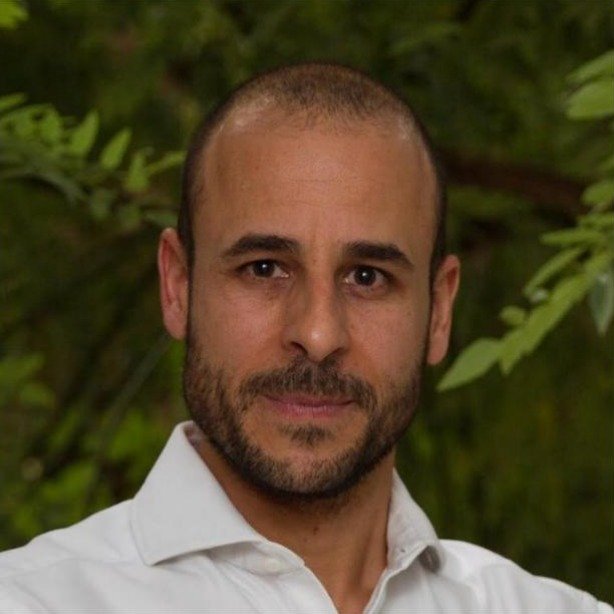
By MANUEL PINILLA
Each few months a brand new examine reviews that an AI mannequin has outperformed docs on a set of diagnostic instances. The newest one I’ve learn got here out in Science in October: Microsoft’s MAI-DxO, examined on 304 complicated instances from the New England Journal of Medication and run as step-by-step simulations, reached the right prognosis in about 83% of them. Main care docs and normal internists, engaged on their very own with reference supplies, bought 36%. Microsoft says the subsequent step is a examine with actual sufferers.
I construct medical AI, so these outcomes matter to my work, however they reply a unique query from mine. Within the setting we work on, emergency departments and first care, a health care provider can be within the room, and that physician indicators the prognosis and solutions for it. Whereas that’s the case, a rating of AI towards docs tells me little about whether or not a device helps. What I have to know is whether or not the physician, with the AI, will get the prognosis proper extra typically, and what occurs when the AI is flawed.
There’s a second hole. A broadcast case arrives already written up: the historical past is full, the related findings are there and the query is evident. An actual affected person tells the story out of order, leaves out what they don’t assume issues and typically can’t put into phrases what they really feel. Getting from that to a very good differential is a big a part of a health care provider’s job, and a benchmark principally skips it. How a device behaves in a selected setting, with the data that setting actually gives, issues as a lot as what the mannequin is aware of.
The place the AI exhibits up within the session
I’m an engineer, not a doctor, and once I take into consideration these instruments my first concern is the interplay greater than the mannequin. To make use of a chatbot throughout a session, a health care provider has to cease, summarize the case, write a query, learn the reply and decide how far to belief it earlier than turning again to the affected person. In a ten-minute main care go to or a crowded emergency division there’s hardly ever time for that, so in follow the device tends to be consulted afterwards, to examine a prognosis that’s already kind of settled. By then the affected person has left, and with them the prospect to ask a unique query or look at one thing that was missed.
That’s the downside we got down to work on at Medsys AI, a startup in Madrid. Our assistant listens to the session and, because it goes on, suggests diagnostic hypotheses, questions value asking and issues to examine within the bodily examination. The solutions are up to date as new data comes up, and the physician doesn’t need to kind something. What to do with them is the physician’s name. The image I had in thoughts was an attending standing behind a resident who’s not sure, out there to docs at any stage of their profession.
A few design choices comply with from that. The assistant exhibits a number of hypotheses with the reasoning behind every, drawn from greater than a thousand medical pointers and checked by a couple of mannequin earlier than they attain the display screen. And the system is constructed in order that we are able to change the underlying mannequin and rerun our evaluations when a greater one seems.
Google and Beth Israel Deaconess printed a examine in The Lancet by which a couple of hundred sufferers with an upcoming main care go to for a brand new downside chatted with Google’s AMIE beforehand, with a doctor supervising each dialog stay. The docs acquired a transcript and a abstract earlier than seeing the affected person, and not one of the conversations needed to be stopped for security. The physicians stated it moved the go to from amassing data in the direction of checking it and deciding with the affected person. It’s a completely different design from ours, earlier than the session as a substitute of throughout it, and I feel it’s a good instance of how to do that: the AI does a part of the work and the physician retains the choice.
What we measured
We evaluated our assistant with docs utilizing it. 13 board-certified household physicians in Spain carried out 260 voice consultations with digital sufferers, performed by a voice mannequin held to the main points of every case. There have been 40 instances, chosen for his or her diagnostic problem, corresponding to a pulmonary embolism or an autoimmune illness presenting with imprecise signs. Every case was randomly assigned to be performed with or with out the assistant, and three adjudicators who didn’t know which arm a session got here from scored the diagnoses. The outcomes had been printed in JMIR Formative Analysis.
The proper prognosis was among the many physician’s high three in 62.3% of unassisted consultations and in 74.6% of assisted ones, a distinction of 12.3 share factors. Counted as misses, that’s 32.6% fewer, and 44.8% fewer within the hardest instances. Physicians rated the device 4.38 out of 5 for usefulness.
The examine has clear limits. The sufferers had been simulated, 13 docs is a small pattern, and within the unassisted arm physicians had no exterior assets (no UpToDate, no search engine), which isn’t how they usually work. These are preclinical outcomes. We at the moment are working a medical trial with actual sufferers within the emergency division of a serious hospital in Madrid, licensed by a analysis ethics committee and by the Spanish Company of Medicines and Medical Gadgets.
Two (out of the, most likely, many) questions we haven’t answered
The primary is time. Assisted consultations took about 35 seconds longer, roughly 10.7%. In an emergency division with a full ready room, 35 seconds per affected person provides up over a shift. We don’t know but the place the appropriate restrict is, or how a lot of that point goes into questions that change the prognosis and the way a lot into studying solutions that don’t.
The second is overreliance. We additionally checked out what occurred within the consultations the place the AI’s diagnostic suggestion was flawed. The system generated solutions in each arms, however solely the assisted physicians may see them. In these consultations with flawed solutions, assisted physicians submitted the identical flawed prognosis 55.8% of the time, in contrast with 38.8% for unassisted physicians, who by no means noticed it. The distinction was not statistically important, so the examine doesn’t present that the assistant pulled docs towards flawed solutions. It doesn’t rule it out both, and with a spot of that dimension in a small examine, I learn it as one thing to comply with carefully. Exhibiting a number of hypotheses with their reasoning doesn’t by itself cease a health care provider from anchoring on the primary one. The medical trial measures this once more, with actual sufferers.
Why prognosis
Many of the AI funding in healthcare over the past two years has gone into ambient scribes. They provide docs time again, and an imperfect be aware carries comparatively little danger, in order that is sensible. We see our work as complementary: a scribe writes up the dialog, and we attempt to assist whereas it’s nonetheless taking place.
Diagnostic error is the place a big share of the hurt is. AHRQ’s 2022 overview estimated that about 1 in 18 emergency division sufferers within the US is misdiagnosed, round 7.4 million folks a 12 months. Emergency drugs societies disputed how that determine was extrapolated, and the actual quantity might be decrease. Even a fraction of it’s a giant downside, and documentation instruments do little about it.
The regulatory path
In Europe, software program that contributes to a prognosis is a medical gadget, and never within the lowest danger class. To get CE marking we want a technical file protecting advantages and dangers, assessed by a notified physique. For us that realistically means a while in 2027. Additionally it is the method that has us working a trial with actual sufferers and reporting danger measures just like the one above.
What I’d prefer to see measured
For the sort of system we’re constructing, standalone mannequin efficiency is just not sufficient to know whether or not it helps. I’d prefer to see extra research, ours included, that measure whether or not docs utilizing the AI are extra correct, whether or not they’re safer when the AI is flawed, and the way a lot time it prices them, first in simulation after which with actual sufferers.
Even that may be a step on the best way. An accurate prognosis issues due to what it does for the affected person, so the measure that counts in the long run is how sufferers do afterwards: over the next days in an emergency division, over months or years in main care, relying on the specialty. We preserve that in thoughts after we design the assistant and its evaluations. We’ve a primary piece of proof that this method can work, and a medical trial underway to see whether or not it holds up. I’ll share what we discover.
Manuel Pinilla is co-founder of Medsys AI, a Madrid-based startup constructing real-time AI assist for physicians through the session, and a co-author of the examine. The paper with the preclinical results.
