

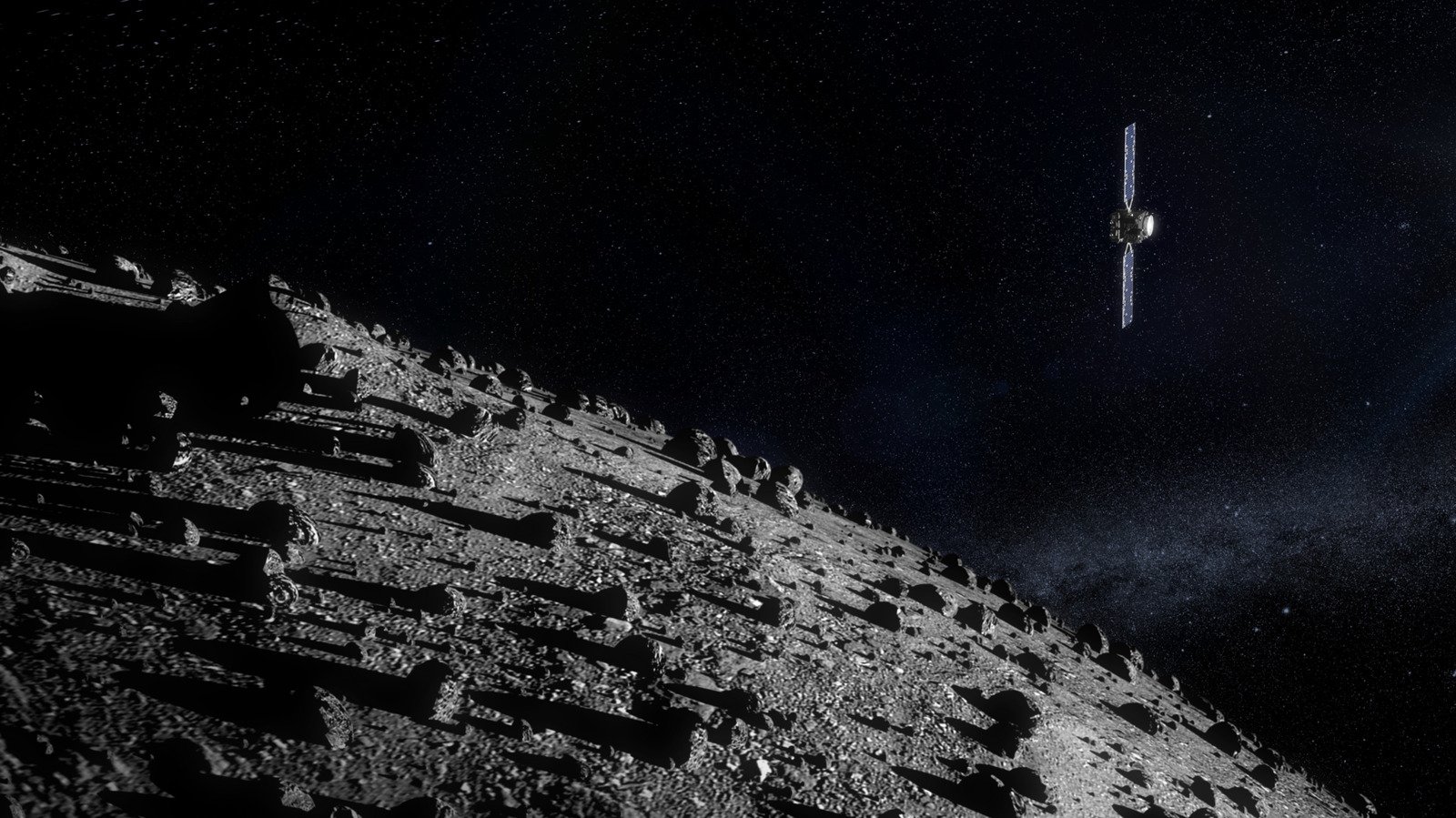
The ESA’s Hera mission has begun capturing photographs of the aftermath of DART’s impression.
In March, NASA revealed it efficiently altered the orbit of Dimorphos and its dad or mum asteroid Didymos across the Solar with its Double Asteroid Redirection Check (DART), and now due to new images captured by the ESA’s Hera spacecraft, we now have a greater concept of what that mission really did to the smaller of the 2 asteroids. The 2022 managed crash created an “impression crater the dimensions of a sports activities stadium,” based on Patrick Michel, the Director of Analysis at France’s Nationwide Centre for Scientific Analysis (CNRS) and Hera’s principal investigator.
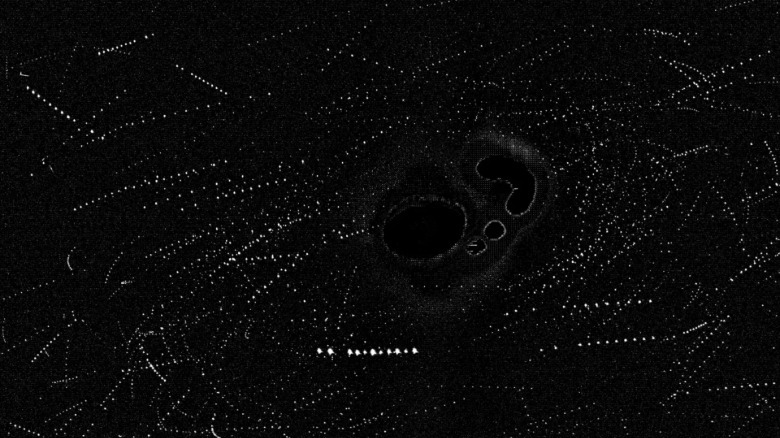
The crater extends throughout your entire width of Dimorphos, based on Michel, but it did not alter the fields of boulders that cowl the remainder of the asteroid. Moreover bodily altering the floor of Dimorphos, the ESA discovered that the DART impression despatched the asteroid tumbling in its new orbit. Hera additionally revealed that each Dimorphos and Didymos are surrounded by lots of of orbiting boulders.
 ESA
All of those new particulars had been captured by Hera’s monochrome Asteroid Framing Digicam, multi-spectral Hyperscout H and JAXA-developed Thermal Infrared Imager from about 25 to 30km away from the asteroids, the ESA says.
“NASA’s DART mission demonstrated that we will change an asteroid’s orbit,” Hera mission supervisor Ian Carnelli mentioned. “Hera is now revealing what occurred to the asteroid itself. By combining these two missions, humanity is taking a decisive step in direction of making asteroid deflection a dependable device for safeguarding our planet.”
NASA and different area businesses are exploring altering asteroids’ orbits as a method of defending the Earth from doubtlessly harmful future impacts. In December, the ESA plans to maneuver Hera nearer to Dimorphos and Didymos to seize even higher-resolution photographs of the impression web site. In January, Hera will even deploy shoebox-sized CubeSats to gather different sorts of information. The Juventas CubeSat, created by a Luxembourg-led analysis group, will use radar to probe the asteroid’s inside and finally land on its floor. An Italian-led group will use the opposite CubeSat, Milani, to prospect asteroid mud and different surrounding supplies.
