

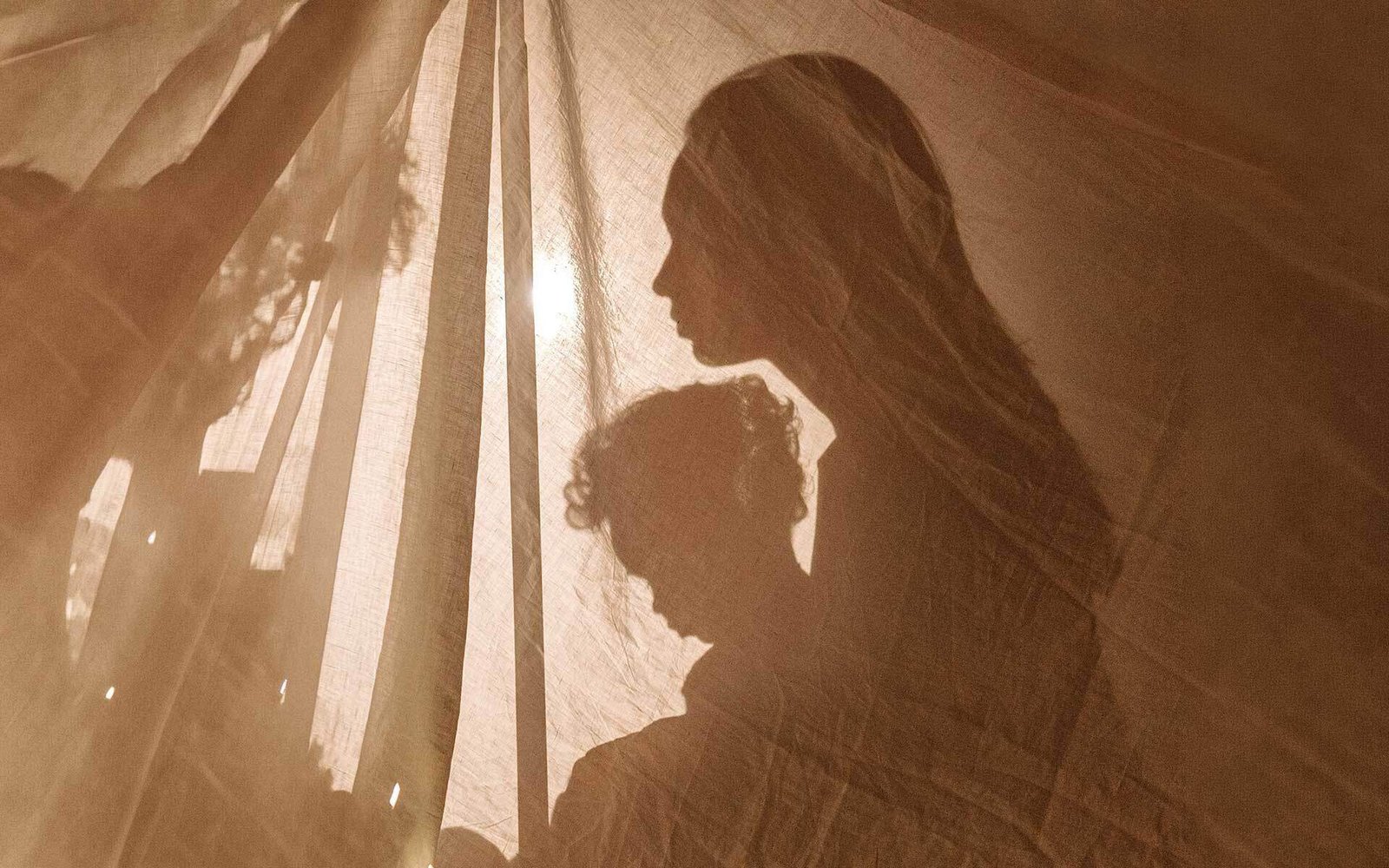
For a lot of ladies, being good has all the time meant being helpful. Their sense of price turns into tied to anticipating everybody else’s wants, taking accountability for issues that aren’t theirs, and ensuring nobody is disillusioned. Their very own wants fall to the underside of the checklist. Over time, it will possibly develop into troublesome to recollect what it feels wish to put themselves first.
What are we afraid will occur if we cease being who others count on us to be?
Sara Hirsh Bordo spent 15 years as a documentary filmmaker telling ladies’s tales earlier than she started analyzing her personal. Her experiences with severe sickness led her to query the principles she’d been residing by, and the result’s her first e book, Autoimmunity and the Good Ladies. She calls herself a “recovering good lady.”
Once we spoke, she saved returning to at least one query: What are we afraid will occur if we cease being who others count on us to be?
The Concern Beneath the Shoulds
Everyone knows the vocabulary. I ought to do extra. I must be out there. I ought to be capable to handle all of it. Bordo thinks the shoulds should not the place this begins.
“I don’t suppose the ‘shoulds’ come first. I feel the fears come first,” Bordo says.
She describes the questions that may come up once we start difficult expectations we’ve lived with for years: What is going to my household suppose? Will I disappoint somebody? What occurs if I develop into somebody new—and what if I don’t like that individual?
“I feel that if you happen to can survive incremental ranges of disappointing different folks, rapidly, there’s freedom that comes within the place of these pockets,” Bordo says.
For Bordo, recognizing these fears meant reconsidering the principles she’d constructed her life round. She started questioning the expectations she’d inherited and making room for brand new methods of occupied with herself and her relationships.
“I feel that if you happen to can survive incremental ranges of disappointing different folks, rapidly, there’s freedom that comes within the place of these pockets,” she says.
She additionally acknowledges how deeply these fears might be handed down by way of generations. They’re not simply her personal, she explains, however a part of the expectations she noticed mirrored in her mom, grandmother, and great-grandmother.
She mentioned this the morning after a Zoom dialog with a e book membership of about 17 ladies of coloration, the place the dialog about permission introduced a number of of them to tears. The dialogue prompted reflection on expectations and beliefs that some ladies had carried for many years.
The Tales We Inherit
Bordo’s query began with a sample. The ladies round her who had been recognized with continual or autoimmune circumstances had been all eldest or solely daughters, herself included. At first, she assumed it was linked to beginning order. So she and what she calls her “crack crew of volunteers” began calling the CDC and the NIH. They discovered analysis about beginning order and well being usually, however nothing on autoimmune illness particularly.
She then carried out an off-the-cuff survey of 300 ladies within the U.S. with autoimmune circumstances, and 70 p.c reported being eldest or solely daughters.
She then carried out an off-the-cuff survey of 300 ladies within the U.S. with autoimmune circumstances, and 70 p.c reported being eldest or solely daughters. A number of of the others wrote her private notes describing how they’d taken on vital accountability for others, regardless of not being the eldest or solely daughter.
The survey was not a scientific examine and had no comparability group, so the findings can’t set up a connection between beginning order and autoimmune illness. However the notes stayed along with her, as a result of they pointed previous beginning order to one thing she describes as “heightened accountability too quickly.”
These observations additionally led Bordo to suppose otherwise concerning the relationship between private experiences and bodily well being.
“Our physique doesn’t simply converse science, it speaks story,” Bordo says.
“Our physique doesn’t simply converse science, it speaks story,” Bordo says.
A health care provider she names as Dr. Carmona then launched her to epigenetics, the examine of how modifications in gene exercise can happen with out altering the underlying DNA sequence. She used it to map experiences from completely different chapters of her life in opposition to what her physique may need been doing on the time. She is obvious that that is her personal framework and never a medical clarification. Nevertheless it gave her a method to consider the physique’s immune response in autoimmune illness, and about permission because the story we inform about who we’re allowed to be.
Permission, she instructed me, “is simply the bottom flooring.”
To explain what it seems like when concern loosens, she reaches for a heist film. She means it as an image of how the change felt; she doesn’t declare it explains how autoimmune illness begins or ends.
“I really feel like that stage of concern and the facility of concern is holding the area for freedom. And when freedom lives greater than concern does, I feel that’s once we are jackknifed into an immune system that truly begins nearly unlocking itself. After which it’s like an Ocean’s Eleven scene. They’re opening the secure, and it’s just like the interior workings of the secure, and the wheels are spinning, after which the doorways are opening, after which that’s the picture that I really feel is occurring in a physique. You truly develop into sovereign sufficient, and courageous sufficient, and self-permitted sufficient to decide on for your self first, and different folks second. That’s the shift.”
I instructed her that final line made me consider somebody I do know. She’s sensible, she is aware of what she needs, and he or she retains handing the choice again to the great lady. The story about what she ought to do wins out over her personal happiness as a rule. I can watch it from the surface, moving into circles.
What It Seems to be Like at 4 A.M.
Bordo shared an instance from earlier that morning. Her greatest pal’s mom was dying, with maybe 48 hours left, and Bordo was because of fly out very early the subsequent day. She had been on the street for 12 straight days and had a Reiki appointment booked for 3:30 that afternoon.
She had woken at 4 a.m. with the outdated intuition: to get on a airplane instantly. “Let me simply maintain that impulse,” she instructed herself, weighing it in opposition to the appointment. “Am I a fraud to my very own e book?”
Arriving with nothing left to present her pal, she reasoned, wouldn’t assist both of them, and he or she knew what the subsequent 5 days would demand. She saved the appointment.
The well-worn path of the folks pleaser remains to be there, even for somebody who wrote a e book about questioning it. At 4 a.m., it was ready.
“I feel we’re all questioning on a regular basis,” she instructed me. “That is nonetheless new. I used to be a folks pleaser for a lot longer than I’ve been sovereign.”
The well-worn path of the folks pleaser remains to be there, even for somebody who wrote a e book about questioning it. At 4 a.m., it was ready. However everyone knows that if you happen to do what you all the time did, you get what you all the time received.
That doesn’t quiet the voice insisting you ought to be doing extra. After I requested concerning the harsh interior critic, Bordo tied it to concern and to one thing she calls “a permission of price.”
“I really feel like if you happen to imagine that you’re allowed a life that’s true and nicely and free, then that units the desk for a special checklist. That may yield that checklist that you’re speaking about. The checklist strikes. The checklist modifications.”
I understand how to handle my illness. Watching the plan collapse but once more, after which residing with the aftermath, is what wears me down.
I do know that checklist nicely. I used to be 14 once I was recognized with Crohn’s illness. In 2007, in my early 30s, after medical issues, I had my gut eliminated, and hoped the toughest half was behind me. As a substitute got here hernias, mesh infections, and extra surgical procedure, with issues persevering with for years earlier than issues lastly settled in early 2025.
I assumed my 50s can be simpler. Then I received shingles, and with an immune system like mine, an abnormal sickness set off six months of fallout. At 51 got here a most cancers scare unrelated to my autoimmune illness, adopted by extra surgical procedure and restoration. My physique has to recalibrate each time. Every setback is yet one more timeout, yet one more delay.
I understand how to handle my illness. Watching the plan collapse but once more, after which residing with the aftermath, is what wears me down. It’s a specific sort of fatigue, the sort that comes from having all of it on repeat, and beneath it there’s resentment, and generally anger. I really feel overwhelmed, and very often defeated, and a voice tells me I must be dealing with all of it higher.
Wanting issues to be completely different is like writing the examine for extra suffering. Some days I would like a leg up, or only a break. After I catch myself in that loop, I do know I nonetheless have work to do.
Self-Forgiveness With out Self-Blame
That is the place I needed to press, as a result of the territory is slippery. You possibly can discover that you simply are likely to neglect your self with out concluding that the neglect made you sick. Bordo is agency on this.
“We didn’t do something to deserve what’s occurred to us,” she says. “Not ever.”
“We didn’t do something to deserve what’s occurred to us,” she says. “Not ever.”
She additionally acknowledges the boundaries of her perspective: “I’m not a physician and you realize that,” emphasizing that she’s talking from private expertise somewhat than providing a medical clarification.
Wanting again, she sees a sample of ignoring signs as a result of they confirmed up at inconvenient instances, whereas she saved placing coworkers, household, and pals first. She had watched ladies exhaust themselves for different folks’s wants, and it appeared regular to her.
Then the diagnoses arrived. She described the expertise of out of the blue having to confront her personal wants after spending a lot of her life targeted on everybody else’s.
“That’s when the human being truly wants to come back on-line the loudest, not the human doing,” she says.
“I had a illness in my physique. I had most cancers in my physique. I had toxicity in my physique.” For some time, it felt too huge to sort out. “Self-forgiveness got here first,” she says, although she knew she hadn’t brought on or earned any of it.
We hear so much about forgiveness being a present you give your self. We hear much less concerning the self-flagellation that may accompany sickness and different troublesome experiences, notably once we discover ourselves questioning whether or not we may have accomplished one thing otherwise.
Self-forgiveness might be troublesome, particularly once we’re accustomed to extending extra understanding to others than to ourselves. I acknowledge that tendency in my very own life, too, and I perceive why Bordo selected to start there.
So she began with one story at a time.
Discovering the Thread
“There wasn’t actually a Sara,” she recollects. She had spent her life understanding who she wanted to be to remain “appreciated, beloved, and secure.” She additionally realized how a lot authority she’d handed to different folks over her personal well-being. That sample, she instructed me, “boils over from private to skilled to medical.”
As of late, Bordo says she’s studying to present better weight to her personal experiences and desires, somewhat than relying solely on exterior measures of how she’s doing. For her, this implies recognizing the worth of her personal perspective alongside medical info, somewhat than treating the 2 as mutually unique.
“These decisions and framework needed to be rewritten and re-authored by me,” she says. That work, she added, started when she reached a very troublesome level in her life.
Recognizing a sample doesn’t essentially imply we are able to instantly break it, notably when sickness, relationships, and circumstances affect the alternatives out there to us.
I instructed her I imagine company and accountability are a part of this too, and I do know the phrase “permission” might be sophisticated for some readers. She doesn’t faux it gained’t be.
Bordo knew her e book wouldn’t resonate with everybody. Some readers discover her method too targeted on the mind-body connection, whereas others interpret her emphasis on private company as suggesting that individuals who wrestle to make modifications are someway selecting to stay caught. She acknowledges that her message could also be obtained otherwise than she intends.
Our dialog left me occupied with how sophisticated change might be. Recognizing a sample doesn’t essentially imply we are able to instantly break it, notably when sickness, relationships, and circumstances affect the alternatives out there to us.
I do know what she says to the individuals who maintain moving into circles: “I need extra for you.”
Be taught extra about Autoimmunity and the Good Ladies here.
