

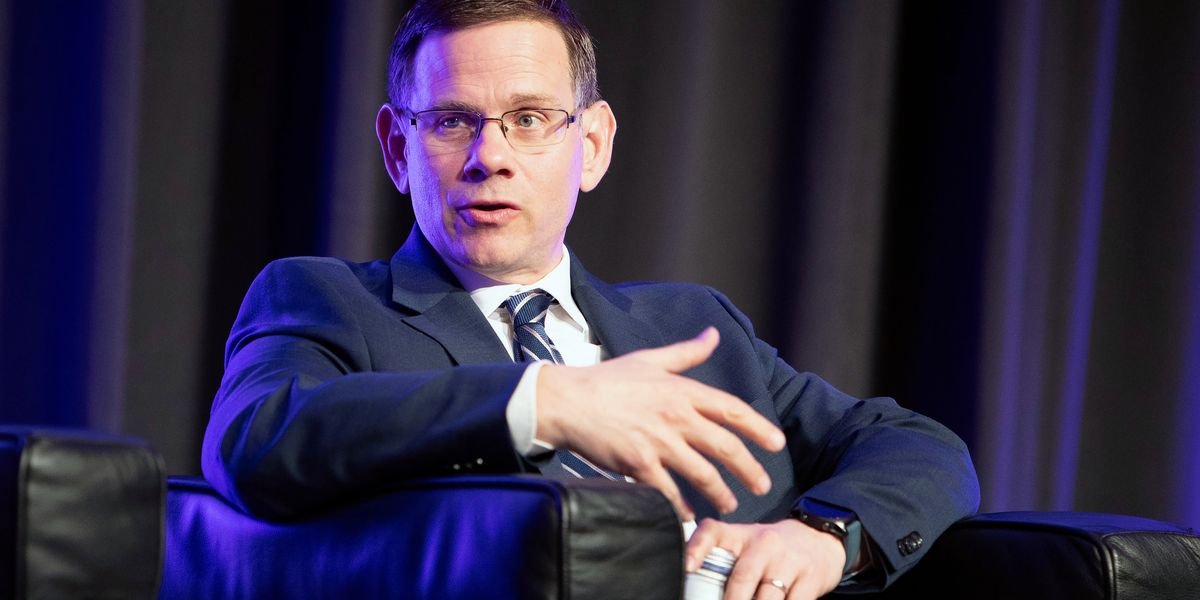
The trajectory from researcher to high government at a number one R&D group doesn’t occur in a single day. It took Anthony Vetro practically 30 years to climb the company ladder at Mitsubishi Electric Research Laboratories, in Cambridge, Mass. He joined MERL in 1996, proper out of school, and he has labored there ever since.
Vetro in all probability is greatest recognized for his analysis in multimedia signal processing, specializing in video compression.
Anthony Vetro
Employer
Mitsubishi Electrical Analysis Laboratories, in Cambridge, Mass.
Title
Member grade
Fellow
Alma mater
Polytechnic Institute of Brooklyn (now New York College’s Tandon engineering faculty)
He grew to become an IEEE Fellow in 2011 for his contributions to video coding, three-dimensional tv, and multimedia adaptation.
Mitsubishi Electric has moved away from making televisions. It now focuses on creating programs together with ones used for protection, electronics, the power {industry}, and space exploration.
His ascension up the chief ranks started in 2018, when he was named a vice chairman and director of MERL. In 2023 he was appointed its president and CEO.
He additionally works intently with the corporate’s new U.S.-based innovation facility in Cambridge. And he lately took on a twin function as deputy head of Mitsubishi Electrical’s world R&D actions, together with in Asia and Europe.
Vetro credit IEEE with serving to him develop his administration expertise after he served in a number of IEEE Signal Processing Society management positions. He additionally discovered from his key roles in establishing worldwide standards for digital picture codecs and video compression, he says.
“Between my IEEE actions, requirements work, and among the enterprise shifts in Mitsubishi Electric, I ultimately graduated to extra administration management roles,” he says.
A multimedia pioneer
Vetro is the son of immigrants. His father got here to the United States from Italy and his mom from Sweden once they have been each of their early 20s. They settled in New York City, on Staten Island.
Though neither guardian went to varsity, his father careworn the significance of schooling to his son at an early age.
“My father began within the mailroom and labored his approach as much as ultimately managing communication accounts and infrastructure for big monetary corporations,” he says. “My mom labored in banks, first as a teller and later doing financial institution reconciliation after pursuing some skilled certifications.
“Via their jobs, they noticed folks with school levels getting higher positions and promotions, so schooling was one thing actually ingrained in me.”
Vetro says he developed a ardour for mathematics and engineering in center faculty. He was accepted into the Staten Island Technical High School, a specialised pre-engineering establishment. There he solidified his curiosity in pursuing a profession within the area.
“Quite a lot of college students didn’t know what they needed to main in at school, however I knew pretty early,” he says.
He was accepted into the accelerated bachelor’s and grasp’s engineering diploma packages on the Polytechnic Institute of Brooklyn (now New York University’s Tandon engineering school). He started his bachelor’s diploma program in 1992 and the grasp’s program in 1994.
“As a part of the grasp’s diploma program, I wanted to do a thesis,” he says. “I wasn’t positive precisely what it will be on. Quickly after taking my first course on image processing, I used to be sure that was an space I needed to work in.”
It was an attention-grabbing time, he says, as a result of broadcast tv was going by means of a serious transformation, shifting from analog to digital through the early Nineteen Nineties. It was lengthy earlier than streaming companies, he notes.
“I really feel that industry-level engagement in IEEE may be very very important to the group in sustaining excessive relevance locally and fulfilling its mission of fostering technological innovation and excellence for the advantage of humanity.”
“The concept of with the ability to provide you with compact methods to characterize this very wealthy data was actually interesting to me,” he says. “I’m additionally a visible learner. I preferred seeing pictures, and there was some good math behind them, too.”
After he earned each levels in 1996, Mitsubishi Electrical employed him for its technical workers. He carried out analysis on multimedia sign processing, specializing in video compression.
“The chance to work on initiatives round digital TV broadcasting and picture processing attracted me,” he says.
He carried out analysis in video conferencing, Web and cell streaming, and video coding know-how, broadly used for broadcasting, DVDs, and Blu-ray discs. He developed a number of applied sciences together with digital TV receivers and shows, surveillance and camera-monitoring programs, automotive tools, and satellite imaging programs.
One other benefit of becoming a member of the corporate, he says, was that it allowed him to pursue a doctorate in electrical engineering, additionally from Polytechnic, whereas working.
“That actually sealed the deal,” he says. He obtained the diploma in 2001.
The highway to administration
After six years as a technical workers member, he was promoted in 2007 to handle the group engaged on digital video coding, processing, and streaming. Seven years later, Vetro grew to become its deputy director, a top-level administration place that he held till 2018.
“After working for about 10 years completely on video compression processing know-how, there have been some shifts in our firm’s enterprise. Its general technique started to alter,” he says, “so I grew to become fascinated with broadening my expertise past video.”
He was requested to steer the lab’s speech and audio group. It was extra development-oriented, he says, and targeted on automobile infotainment and speech interfaces earlier than Alexa and Siri existed. He pivoted the group’s focus extra towards analysis and established strategic paths tailor-made to rising alternatives inside the group. Recognizing rising tendencies in sensing and information security, he shaped teams that labored on them.
Mitsubishi Electrical’s first U.S. innovation hub
To assist spur innovation between Mitsubishi Electrical and its U.S. clients, the corporate in June opened Serendie Street Boston, its first digital transformation hub in the USA. It’s colocated with MERL.
The brand new workplace is modeled after the primary Serendie Road collaboration house, which Mitsubishi Electrical launched in 2024 in Yokohama, Japan.
The phrase serendie is a mix of serendipity and digital engineering, in accordance with the company’s website. Serendie is the digital platform designed to foster collaborations between information, folks, and know-how, it says. The house the place folks work together to extract concepts from the information is named “the road.”
The platform brings collectively researchers, startups, clients, and companions to determine new merchandise, check them, run pilot packages, and scale them up.
Vetro says he’s excited in regards to the endeavor.
“Serendie Road [Boston] goals to strengthen the bridge between our world R&D efforts and real-world {industry} challenges. The hub is meant to deliver our companions and clients collectively to interact in additional cocreation actions, the place we take heed to their issues and work collectively to resolve them,” he says. “I feel the corporate has come to acknowledge that we will’t simply do all of it internally by ourselves.”
The applied sciences being labored on embrace robotics, power options resembling integrating renewable energy into the grid, and more energy-efficient data center systems.
The choice to colocate the hub with MERL workplaces was deliberate, Vetro says.
“The realm has a really wealthy ecosystem,” he says. “We now have Harvard, MIT, and lots of different universities a stone’s throw away.”
Strengthening IEEE’s involvement with {industry}
Vetro joined IEEE in 1992 as a pupil member throughout an occasion the Polytechnic’s pupil department was holding. He loved studying the IEEE Potentials pupil member publication and different periodicals, he says.
“Within the earliest levels of my profession, IEEE was a spot the place I may attend conferences, learn journals, and keep on high of the most recent analysis and tendencies,” he says. “Through the years, I used to be capable of construct an expert community, which has been useful. That facilitated quite a lot of analysis collaboration with college professors attending the conferences.
“In more moderen years, IEEE has supplied a terrific platform for {industry} to exhibit thought management and focus on real-world issues we’re going through. I feel these discussions could have even set some analysis instructions among the many tutorial group.”
Vetro is an lively volunteer for the IEEE Signal Processing Society. He has chaired a number of of its technical committees and conferences, and he served as an affiliate editor for a few of its journals.
He says he’s most happy with establishing the society’s industry board and serving as its inaugural chair. The board shaped a corporate engagement program, launched the Industry Signals e-newsletter, developed short courses tailor-made to {industry}, and holds profession festivals on the society’s flagship conferences.
Vetro additionally had a hand in MERL sponsoring two IEEE technical field awards: the Flanagan Speech and Audio Processing Award and the Fourier Award for Signal Processing.
“Business-level engagement in IEEE is absolutely very very important to the group in sustaining its relevance to the group and fulfilling its mission of fostering technological innovation and excellence for the advantage of humanity,” he says.
From Your Web site Articles
Associated Articles Across the Internet
